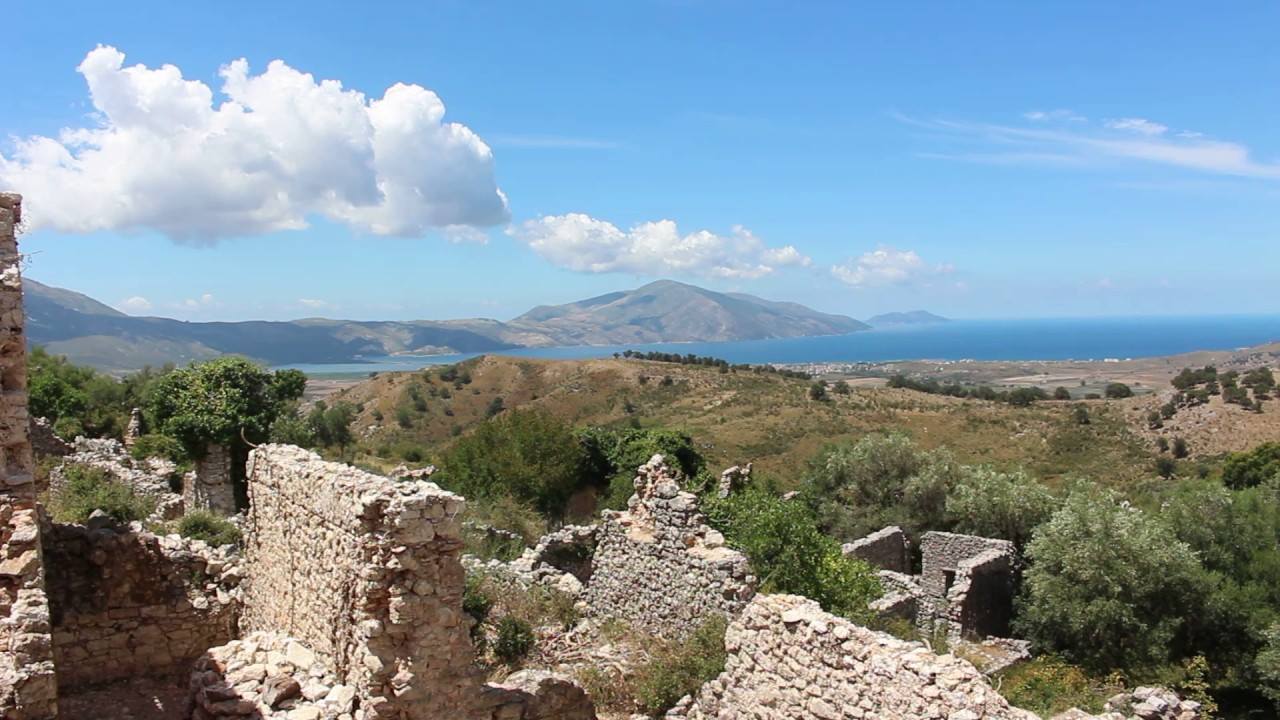
LLOGORA PARK

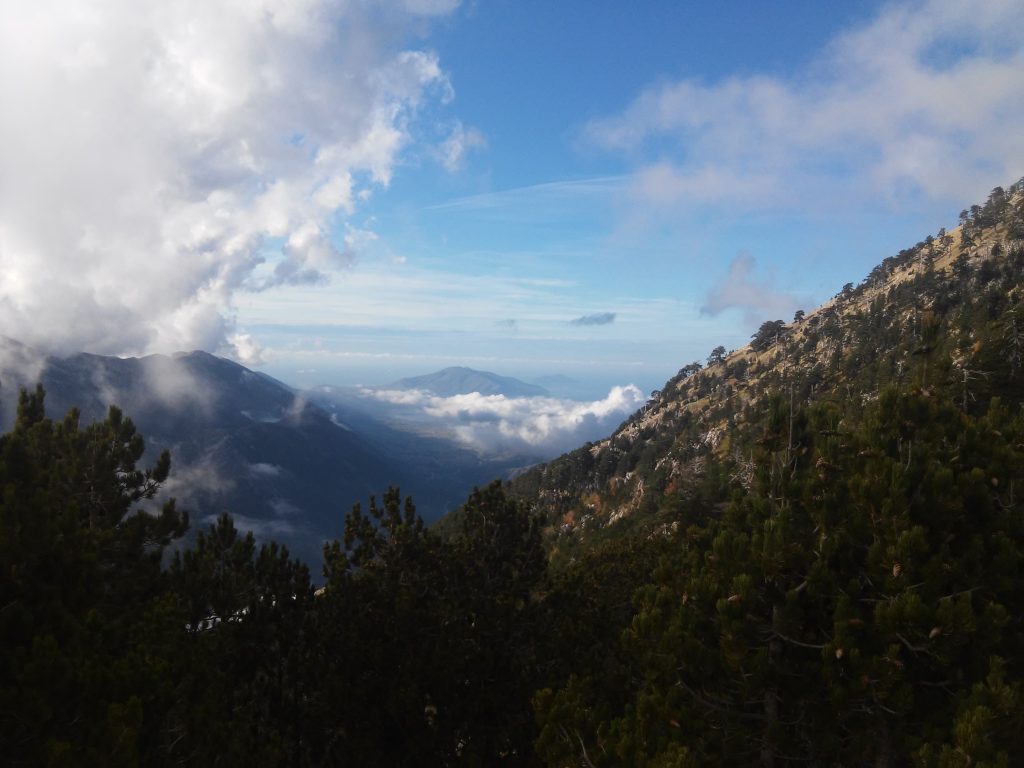
The National Park of Llogara carries historical value, as it has been reported that Jul Çezari crossed the “Neck of Llogara” at an altitude of 1025 m.

Llogora Park is located approximately 40 km southeast of the city of Vlora, on the spatial border between the Adriatic and Ionian seas. Near Qafa o Llogora there are trees with very interesting crown shapes in which the influence of currents is felt.

Flag Pine, Llogora is located in the National Park of Llogora, a little north of the neck of the same name, 910 m above sea level. It has the shape of a flag as a result of the action of strong southeast winds. The pine belongs to the species Pinus nigra. The tree has a height of about 20 m, trunk diameter of 75 cm and an age of about 100 years. This monument has scientific, biological, aesthetic and touristic values. Some branches are drying up due to natural factors. To get to this monument, take the Vlorë – Dukat – Llogora highway until you get to the Llogora pass, on the right of the road, after you have passed the tourist village).
MARMIROI CHURCH

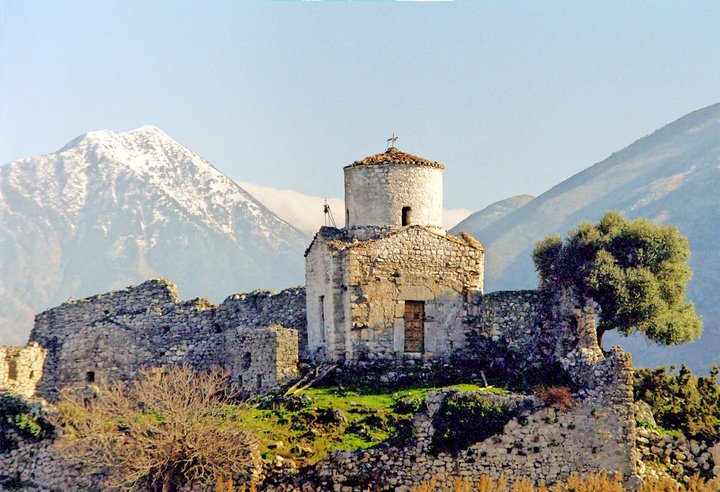
The Church of Marmiro is a church near Pashaliman, Vlore County, Albania. It is a solitary place of worship, built on a hill very close to the shore of the lagoon. 

It is declared a Cultural Monument of Albania. 

It is a Byzantine church with a dome, the construction of which dates back to the c. XII. Cross-domed churches are typical of monastic complexes, and in fact, the ruins of a chimney, a window and some niches hint that there may once have been a monastery there.

The church is mentioned in historical records for the first time in 1307. Since it has no narthex, and because of other similarities to other similar churches in Bulgaria and former Yugoslavia, it is thought to have been built in the 12th or 13th century AD, although some researchers have put its construction period in the 10th century at the end of the middle Byzantine era. The most accredited hypothesis is that it was dedicated to Saint Mary, in particular to the Mother of God of the Life-giving Spring.

The church is located at the gulf of Vlorë near the archaeological site of Oricum.

 At the end of “Princesha Rugjinë” boulevard, follow the road that leads to the foot of the canal. You can go here by car and then walk.

KANINA CASTLE

Kanina Castle is a cultural heritage monument in Kanina, Vlora District, Vlora County, Albania [1]. This monument is of the “Archaeology” type, approved with the number “No. 95 Dt. 1.10.1948”.

Kanina Castle is located 6 km from the city of Vlora, on a hill 380m above sea level. The surrounding wall is 1 km long and covers an area of 3.5 hectares. It is thought to have been erected there from the 4th century BC. In the entire fortification system, we distinguish several construction phases that span two periods, the ancient period as well as the medieval period, namely Byzantine, Venetian and Turkish. The castle was rebuilt by Justinian in the 6th century, who in Epirus built or rebuilt 94 fortifications.

It is mentioned by Procopius of Caesarea in his list under the name Kionin.

In the XII-XIII centuries, it turned into a first-rate military center, serving the Medieval Kingdom of Angevin Albania. It was also owned by Sultan Sulejmani in 1530 and recently by the Albanian feudal lords of Vlora in the XVII-XIX centuries.

OLD TRAGJAS

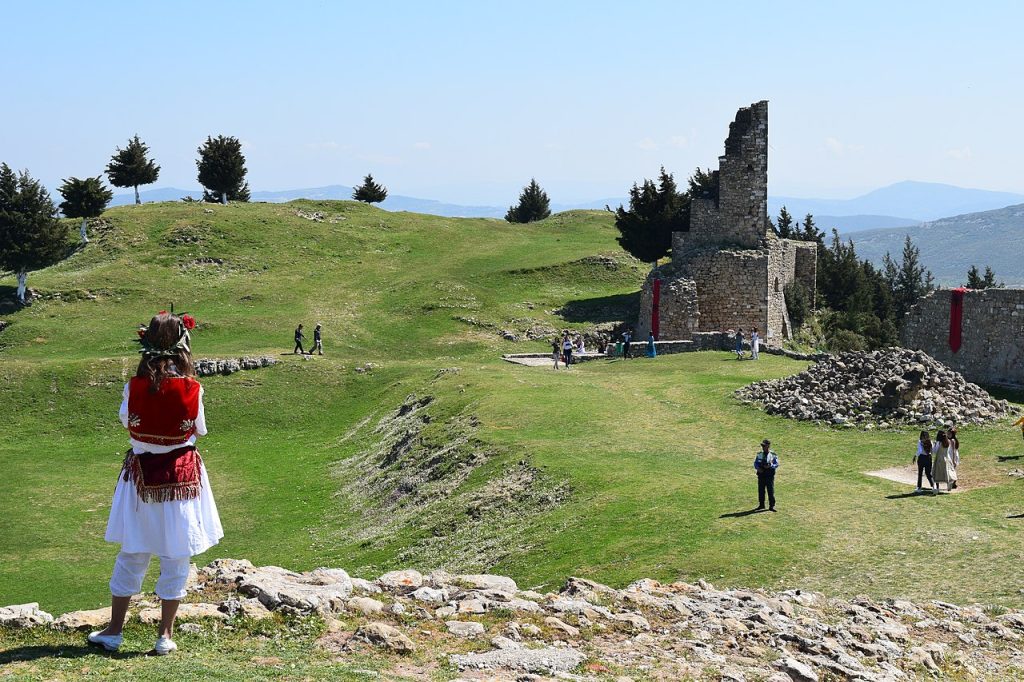
The village has been inhabited since ancient times where the ruins of the city of Sofa are located near old Tragjas dating to the Illyrian tribes to the IV century BCE.

The village revolted in 1432 and the castle of Sofa was ruined by the Ottomans. The village joined Skanderbeg’s rebellion in 1444 and Gjon Boçari from the village built a second castle in the village.

The village continued to join local rebellions during the following years: 1537,1581,1833 and 1847 and in 1912 it supported greatly the Albanian founding fathers.

During World War II Tragjas was part of the battlefield of the battle of Gjorm, where Albanian resistance units defeated and routed the troops of the Kingdom of Italy.

Tragjas was burned twice during WW2, firstly by Italians on 7 August 1943 and secondly by the Nazis on 5 August 1944.

Scroll to Top