Facts
Rocky Coasts
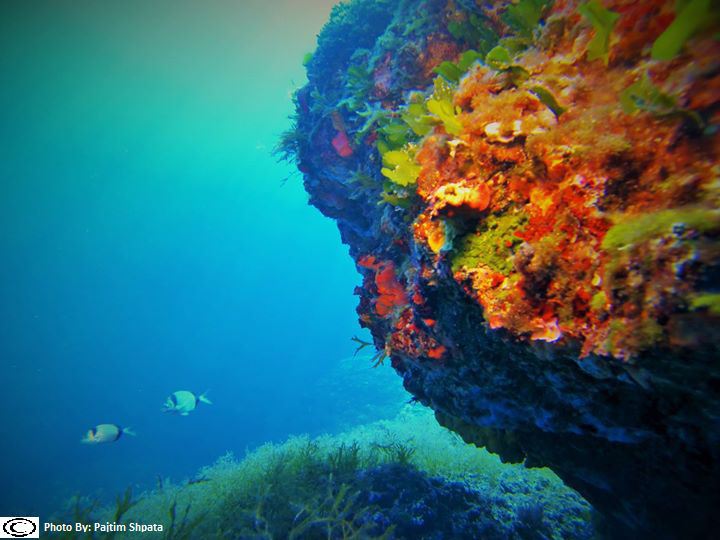
The rocky coastline of Rreza e Kanalit-Karaburun, Sazan island display, mostly on the western side exposed to the Adriatic sea, high cliffs diving vertically into the sea.
The wave swept supralittoral of rugged cliffs is dyed in dark by cyanobacteria which are grazed by Littorina shells. The midlittoral is characterized by calcareous algae of Lithophyllium sp. which are good biological indicators of superficial pollution and fluctuant sea levels (Lithophyllium sp. is a protected species considered as a natural monument).
Coralligenous algae, a biogenic formation building a rim which can extend locally to more than 1m in width, are present at the mediolittoral stage along the western coasts of Karaburun, Sazan island and Rreza e Kanalit area.
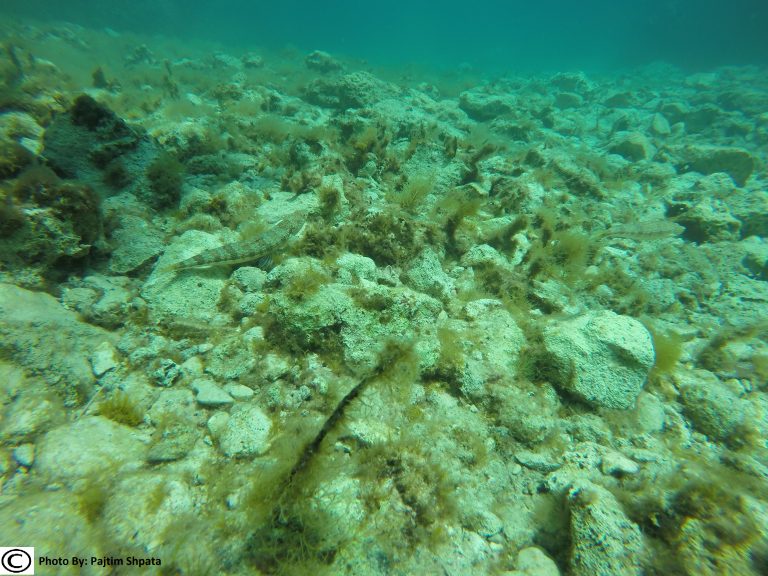
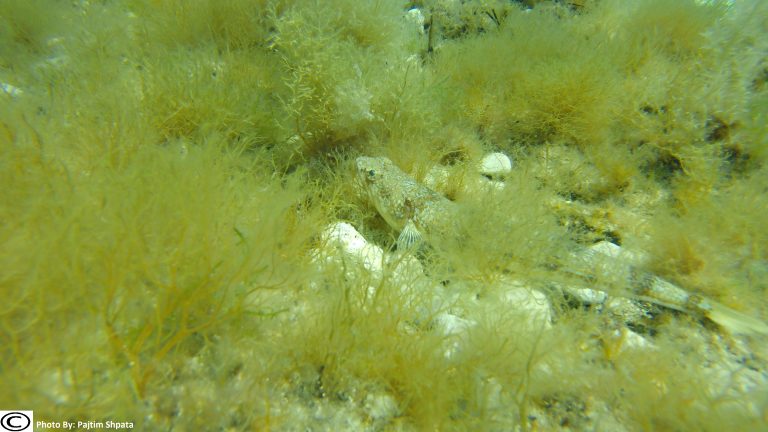
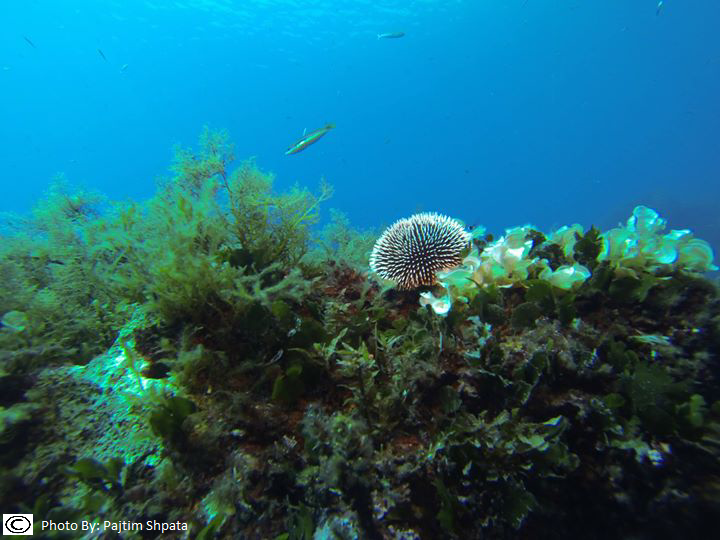
The Infralittoral is mainly composed of Cystoseira sp. with Padina sp., Acetabularia sp. in beaten areas grazed by sea urchins and fish such as Sarpa salpa, other algae Peyssonelia sp., Halimeda sp, and Udotea sp. occur in calmer and deeper areas.
Patches of Posidonia oceanica are seen in protected areas at a depth of 15-20m on rocky platforms along the slope or at greater depth up tp 30-40 m according to our diving observations made at the tip of western Karaburun. Both Posidonia sp. and Cymodocea sp. are protected in the Mediterranean Sea by law since 1988.
Coastal vegetation in higher altitudes
In the National Park of Llogara, vegetation is mainly characterized by a Mediterranean shrub zone up to 600 m with predominantly kermes oak, lentic, tree heather and prickly cedar (Buxus sempervirens, Daphne laureola, Quercus coccifera, Evonimus europeaus) with single trees of Taxus baccata and small patches of Pinues hedreichi, between 600-800 m Holm oaks, ash, hop-hornbeam and sow thorn mainly grow.
Above this zone, from 800-1300 m the beech zone is dominated by beech, silver fir, black pine, maple, juniper and dog rose (Pinus nigra, Abies alba, Acer pseudoplatanus, Fraxinus ornus, Ostrya carpinifolia).
Endemic and rare species in the alpine zone of herbaceous species are scattered from 1400 m to 2000 m: Colchicum autunnale, Sideritis roeseri, Lilium chalchedonicum, Hypericum haplophylloides.
Caves
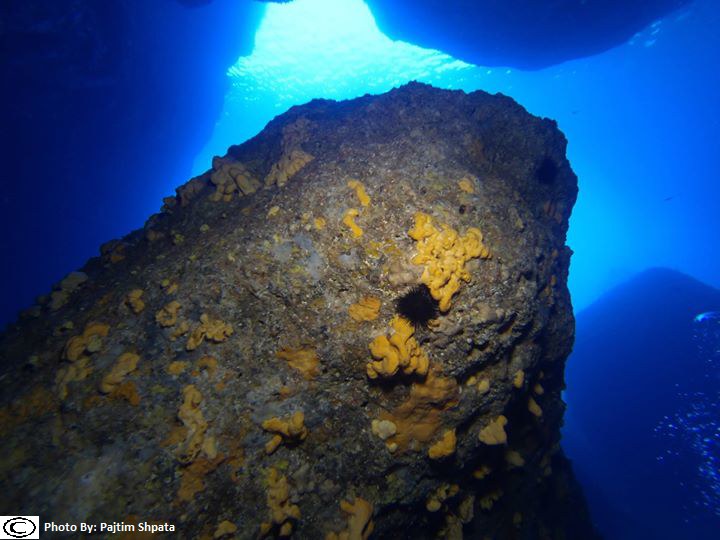
Four underwater caves at the tip of the Karaburun peninsula have been studied and have shown very specific fauna different from the other side of the Adriatic. Some of these caves are monumental (up to 50 m high) with stalactites along the walls and hosting fresh water fauna (kingfishers, mosquitos, bats), such as the Haxhi Ali’s cave located in the bay of Veriu.
Fresh water resurgence happens very often in the caves and along the canyons.
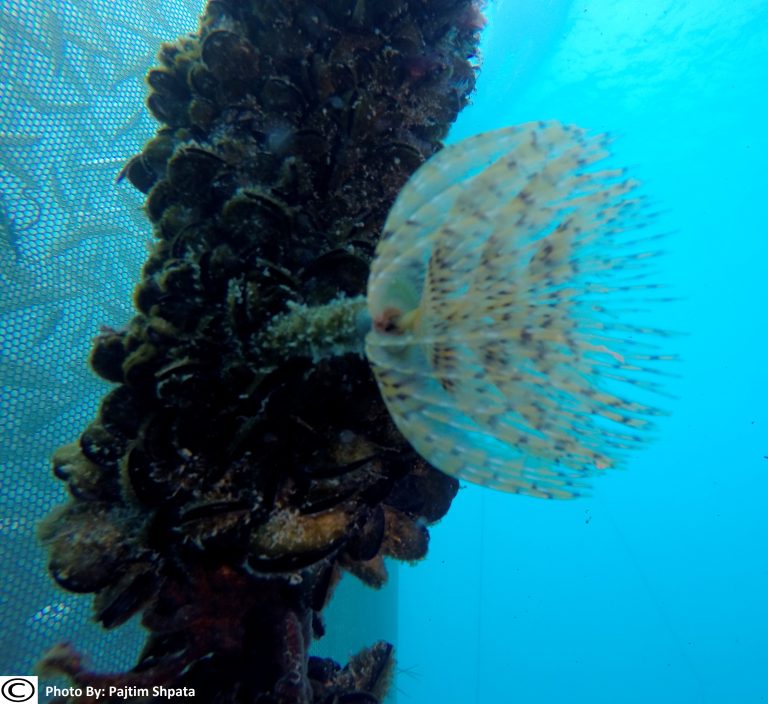
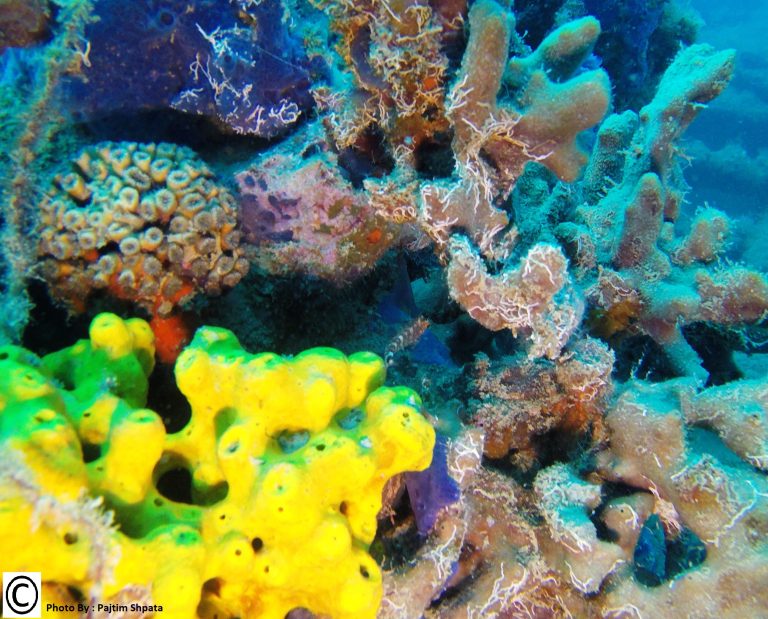
In particualar a population of Hypsicomus stichophthalmus (Polychaeta) was present in Haxhi Ali’s cave with abundant fishes, echinoderms, worms, crustaceans. At about 40 m deep, red cartilagineous algae Fauchea sp. is exuberant and very often seen with brightly colored sponges.
These habitats are rich in algae species and crustaceans decapods, while echinoderms are also present with holothurians, sea urchins, sea stars (cushion stars), and ophiurians. Coelenterates Corallum rubrum are of great interest.
The canyons and caves, often inaccessible, represent an ideal habitat for monk seals (Monachus monachus) wich were reported in the area still in 1982 (a juvenille has been 1960 and its body is exposed at the Museum of Natural Sciences in Tirana).
Mediterranean maquis and pine forests
The coast is mainly composed of xeromediterranean sclerophyllic maquis, locally forest of Euro-Medieterranean evergreen forest with pines, cypresses and mainly oaks (Quercion ilicis and Oleo-Ceratonion) in the valleys and dry river canyons. Rocky coasts are usually covered by a typical mediterranean maquis which is still quite abundant on Sazan island and along the Rreza e Kanalit – Karaburun.
The eastern sido of Karaburun has more areas deforested by fires in a landscape of maquis with a few pines and cypresses shaped by the wind. Small dry river canyons fall into the sea almost vertically.